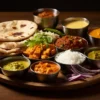
When you think of Indian food, the first image that often comes to mind is a plate filled with a variety of colorful dishes, neatly arranged in small bowls around a heap of rice or a couple of chapatis. This is the Indian Thali—a wholesome meal that brings together different flavors, textures, and nutrients on one platter.
Unlike a single dish meal, the thali is about balance. It combines sweet, sour, spicy, bitter, and tangy elements in just the right proportion. Every region in India has its own interpretation of the vegetarian thali, making it not only a meal but a reflection of culture and tradition.
In this guide, let’s explore what goes into a traditional Indian vegetarian thali, its regional variations, and why it continues to be one of the most loved ways of eating in India.
What is a Thali?
The word thali simply means “plate” in Hindi. But in culinary terms, it refers to a full meal served on a large plate or banana leaf, with several small bowls holding different dishes. The beauty of a thali lies in its variety—it’s not just about filling your stomach, but also about satisfying every taste bud.
Traditionally, thalis were designed keeping Ayurveda in mind, ensuring that the six tastes—sweet, sour, salty, bitter, pungent, and astringent—are represented. This balance is believed to aid digestion and provide complete nourishment.
Common Elements of a Vegetarian Thali
While the exact composition varies across regions, most vegetarian thalis include:
- Rice or Rotis (Staple): The foundation of the meal—steamed rice, jeera rice, plain chapatis, or puris.
- Dal or Sambar (Protein): Lentils are a must, whether it’s dal tadka in the north or sambar in the south.
- Sabzi (Vegetables): Seasonal vegetables, cooked dry or in gravy, to add nutrition and color.
- Pickles and Chutneys: Spicy, tangy sides that enhance flavors.
- Curd or Raita: Helps cool down the palate and aids digestion.
- Papad: Crispy, crunchy accompaniment, often roasted or fried.
- Dessert: A sweet dish like kheer, halwa, or payasam to end the meal on a happy note.
A good thali is like a mini-feast—it keeps your taste buds guessing while ensuring you don’t miss out on nutrients.
Regional Vegetarian Thalis of India
India’s vastness means that every state has its own thali tradition. Let’s take a journey across the country.
1. North Indian Thali
A North Indian thali usually includes dal tadka, paneer curry, a dry sabzi like aloo gobi, chapati or naan, jeera rice, curd, salad, papad, pickle, and a sweet like gulab jamun. Rich and hearty, it reflects the flavors of Punjab, Uttar Pradesh, and Rajasthan.
2. South Indian Thali
Served on a banana leaf in many places, this thali includes sambar, rasam, poriyal (stir-fried vegetables), kootu (vegetable and lentil curry), curd rice, pickle, and payasam. Coconut, curry leaves, and tamarind dominate the flavors here.
3. Gujarati Thali
Known for its sweet undertones, the Gujarati thali is a treat. It includes dal or kadhi (with a slight sweetness), two or three vegetable dishes, theplas or puris, rice, khichdi, chutneys, papad, and sweets like shrikhand or basundi.
4. Rajasthani Thali
Rajasthan, with its arid climate, focuses on dishes that last long and need less water to prepare. A Rajasthani thali often has dal baati churma, gatte ki sabzi, ker sangri, missi roti, and sweets like ghewar or lapsi. It’s bold, spicy, and filling.
5. Maharashtrian Thali
Here, you’ll find varan bhaat (dal-rice), puran poli (sweet stuffed bread), usal (sprouted curry), bhakri (millet flatbread), and chutneys made with peanuts or coconut. It’s a wholesome combination of comfort and festivity.
6. Bengali Thali
Though Bengal is famous for its fish curries, vegetarian thalis during pujas are equally delightful. A typical spread may include shukto (a mildly bitter vegetable stew), dal, luchis (puffed bread), aloo dum, chutney, and sweets like rasgulla or sandesh.
7. Kerala Sadya
Kerala’s Sadya is a festival thali served during Onam. Spread across a banana leaf, it includes up to 20–25 items—avial, thoran, olan, sambar, rasam, pachadi, pappadam, payasam, and more. It’s a true celebration of abundance and flavor.
Why is a Thali Special?
- Balance of Flavors: No other meal gives such a variety of tastes in one sitting.
- Nutritional Value: Dal for protein, vegetables for fiber, rice/roti for carbs, curd for probiotics—it’s a balanced diet.
- Cultural Identity: Each thali is a snapshot of the region’s history, climate, and lifestyle.
- Communal Bonding: Thalis are often enjoyed together, symbolizing sharing and abundance.
Tips for Making a Mini Thali at Home
You don’t always need 10–12 dishes to recreate a thali experience at home. Here’s a simple approach:
- Choose a base – rice or roti.
- Add one dal and one vegetable curry.
- Keep a side like pickle, papad, or salad.
- Include curd or buttermilk.
- Finish with a small dessert like kheer or halwa.
Even with just 4–5 components, you can enjoy the essence of a thali without spending hours in the kitchen.
Final Thoughts
The Indian vegetarian thali is more than just a meal—it’s an experience. It tells stories of geography, tradition, and community through food. Whether it’s the spicy tang of a South Indian rasam, the sweetness of a Gujarati kadhi, or the richness of a Punjabi dal makhani, every thali is a journey across India’s diverse food culture.
Next time you’re at an Indian restaurant or planning a festive meal at home, go for a thali. It’s not just about eating—it’s about savoring India on a single plate.